Promoting physical activity for blind and low-vision participants through adaptive sports

Category: Participant Dispatch

  • Eleven Blind and Low Vision Climbers Break World Record Summiting Mt. Kilimanjaro. By Susan Bueti Hill

    Eleven Blind and Low Vision Climbers Break World Record Summiting Mt. Kilimanjaro. By Susan Bueti Hill

    At the edge of northern Tanzania, where the plains stretch toward Kenya, Mount Kilimanjaro rises—unyielding, solitary, and powerful. At 19,341 feet, it is the highest free-standing mountain in the world. But for us, Kilimanjaro became more than a peak. It became a testament to grit, resilience, and the unbreakable strength of community. 

    Sixteen friends from the US and Canada set out along the Lemosho Route on a nine-day expedition—eleven of us blind and low vision explorers. I, President of New England Ski for Light, made the journey as a low vision explorer and teamed up with the NESFL Vice President, long-time volunteer and beloved sighted guide Joanie Holcombe. What followed was not just a climb, but a shared journey of trust, endurance, and a deepening friendship. By day seven, we reached the summit. In doing so, nine of us, blind and low-vision climbers broke a world record for the most BLV climbers to summit together—proving what is possible with the right support and determination. 

    Susan and fellow hiker, backpacks labeled: “Blind Kili Climbers”

    We did not climb alone. Behind us stood a powerful community: 65–70 Tanzanian guides and porters, walking step by step with us and sharing their deep knowledge of this magnificent terrain. Every movement up the mountain was built on trust—through detailed verbal and physical guidance, steady pacing, and a shared belief that no one gets left behind. Our guiding principle was simple: “pole pole”—Swahili for “slowly, slowly”, to ward off altitude sickness. And of course, “Hakuna Matata,” reminding us to stay calm and keep our spirits bright. 

    Each day brought more than ten hours of hiking through five distinct climate zones—from lush rainforest filled with colobus monkeys and birdsong, to stark alpine desert, and finally to the unforgiving arctic summit. As we climbed higher, the air thinned and temperatures dropped below freezing. One morning, we woke to snow blanketing our tents. There were no ropes, no technical shortcuts—just rugged terrain, biting wind, and the quiet battle between body and mind. This is where grit lives.

    Orange tents pitched on rugged, snowy terrain.

    I felt it in the long training days leading up to the climb—preparing at sea level in Cambridge, Massachusetts, with weighted hikes, lunges, and relentless repetition. I felt it in every step I took despite fatigue, altitude challenges, and the unknowns that come with breaking new ground—doing what I had only recently imagined I could do. And still, we kept moving. Together. 

    There are moments on a mountain that stay with you forever. For many of us, it was the Barranco Wall—a steep, narrow ascent that demanded hands on rock and absolute trust in our guides. What seemed impossible from below became a triumph at the top, where the landscape suddenly opened wide, revealing the vastness of the world. For Joanie, it was the quiet beauty of camp at night—the glow of tents beneath a sky filled with stars, and the realization that despite every challenge, she was still standing in community “on top of this glorious world.” For me, my defining moment came on our summit day descent. After more than 12 hours of hiking down from the summit—moving from day into night across rugged terrain—snow began to fall. Then, in the darkness, still far from basecamp hiking down cliffs, I saw the glowing lights of Moshi below—a warm, radiant welcome home! At that moment, the journey came full circle. The mountain had tested me, but it had also given something back: connection, culture, and a deep sense of belonging. 

    Life on the mountain was simple but powerful: morning tea, shared meals, steady hiking, uproarious laughter, singing, and early nights listening to the wind. Bonds were built in those quiet, ordinary moments. And the journey didn’t end at the summit. We carried our purpose beyond the mountain—visiting local communities in Moshi, including Tuleeni Orphanage, Project Hope, and Mwereni School for the Blind, where 80 children, many with albinism, live and learn. These experiences grounded our expedition in something deeper: giving back, learning, and connecting across cultures. 

    Joanie, Susan and Tanzanian friends holding small paintings of Mount Kilimanjaro featuring Maasai tribesmen wrapped in red.
    Susan visiting  Project Hope in Moshi, TZ.

    Kilimanjaro doesn’t just challenge your body—it reshapes how you see the world. It reminded me that strength is not just physical. It’s found in patience, in perseverance, and in the courage to believe in your own abilities—even when (so many) others project doubt. It showed me that having the right support makes all the difference in overcoming obstacles and clearing a path to success. That no summit is ever reached alone. And that sometimes, the greatest achievements don’t come from individual effort, but from collective resourcefulness and expertise. Summiting with this group proved, beyond doubt, that some seemingly impossible  limitations—with the right support—can be pushed, redefined, and beautifully overcome.

  • A Week That Moves You: The Spirit of Ridderrennet Adaptive Cross Country Ski Week in Norway. By Susan Bueti Hill

    A Week That Moves You: The Spirit of Ridderrennet Adaptive Cross Country Ski Week in Norway. By Susan Bueti Hill

    Each year, Ski for Light International selects a team of four to represent them at the world-renowned Ridderrennet—and this year, I had the incredible privilege of being one of them. Held in Beitostølen, Ridderrennet is the largest annual adaptive cross-country ski event in the world, bringing together up to 450 participants from 12 to 15 countries. But calling it just a “race” doesn’t quite capture it. Rooted in tradition and meaning, the name itself reflects a “knight’s race”—a fitting description for an event defined by competition within a supportive and fun adaptive-ski community.

    Norwegian Royal Band at opening ceremony.

    The energy surrounding the Ridderrennet was palpable. Even fellow airplane passengers and Oslo tram riders lit up when I mentioned the event—everyone seemed to know it. “Ah yes, the Ridderrennet!” they would say, often adding that a friend or family member had participated. It quickly became clear that this event is a cherished national tradition.

    Upon arrival, our Ski for Light team enjoyed time in Oslo, a vibrant coastal city that reminded me of my beloved Boston with its charm, history, and waterfront beauty. As we acclimated, the excitement only grew. I also began to see just how close-knit the blind and low vision community is in Norway. Many of the Norwegian participants had grown up attending summer camps together and had maintained those friendships into adulthood. Their warmth and connection made me reflect on our own Ski for Light family back home—I missed folks even as I felt deeply welcomed in Norway.

    Historic 12th Century staved church near Oslo with NESFL friends.

    Once in Beitostølen, I was thrilled to be paired with Julie Copens, Ski for Light President and an extraordinary guide. Having Julie as a ski partner meant more than excellent guiding—it meant traveling with someone who radiated joy, welcomed every new person we met, and reminded me how deep and lasting the friendships we make through Ski for Light can be. Each day brought its own adventure, driven by fun, gratitude, and a spirit of athletic challenge. Thank you, Julie, for being the best travel buddy and guide I could have asked for.

    Susan and Norwegian ski guide at beautiful stained glass in Beitostolen, Norway.

    One of the most meaningful parts of the trip was connecting with other participants who have albinism, as I do. It was incredible to share stories and experiences with others from around the world who understood not only my visual condition, but also the unique identity that comes with being albino. I was especially inspired by one fierce competitor who shared that she introduced the sport of goalball to Scotland—her passion and leadership left a lasting impression on me.

    And then there was dogsledding—what an unforgettable experience. I was lucky to ride with a kind local musher whose beloved team carried us up steep snowy trails, raced down hills with joyful chaos, and soared across a frozen lake under the bluest sky. It felt like something out of a Nordic fairy tale.

    Beautiful blue skies over a pristine ski tracked, snowy barren landscape.

    One of the most powerful moments came at the finish line on race day. As each skier returned, our group was there—cheering, clapping, and celebrating one another’s accomplishments. I was bursting with pride for all our medal winners—you rock!—and I will never forget the love and encouragement I felt as Julie and I crossed the finish line together. It was a beautiful celebration of community and our shared love of Nordic skiing.

    Susan & Volunteer Norwegian guide Kaja after biathlon race.

    Ridder Week was a gift in so many ways—from deepening friendships to forging new bonds, from exploring Norwegian culture to gliding confidently along the ski trails. I came home with a full heart, a spirit fueled by adventure, and immense gratitude for the opportunity to be part of something so meaningful. Thank you, Ski for Light International for the gift of this unforgettable journey!!! 

    Warming by the fire before dogsledding.
  • Ridderrennet

    Ridderrennet is the world’s largest annual winter sports week for people who are visually impaired or disabled, and is the program upon which Ski for Light, Inc., is modeled. Erling Stordahl started the first Ridderrenn in 1964 with 57 participants, and it was only for blind skiers. Today, there is a full week of skiing activities and competitions for all classes of visually and mobility impaired athletes.

    Each year, over 450 disabled skiers from many countries participating in different competitions at Beitostølen, Norway. In 2025, several members from NESFL attended the Ridderrenn. 

    From Jessie Mabry:

    “My trip to Norway offered many exciting opportunities for me to step out of my comfort zone, starting with my first international flights alone. My favorite moments included excursions to some breathtaking mountaintop ski trails that opened to Ridderweek participants for the first time in decades; the honor of singing in Norwegian with inimitable SFL president Julie Coppens as the only U.S. act in the event’s talent show; and an incredibly detailed, moving tour of the Norwegian Resistance Museum in Oslo. More than the outstanding food, the convergence of so many cultures, and racing with hundreds of people, what I’ll always remember is the quality time I spent with our American delegation sharing stories, laughs, and challenges as we created new friendships and deepened existing ones.”

  • Q & A with Volunteer Guide Diane Manganaro

    Q & A with Volunteer Guide Diane Manganaro

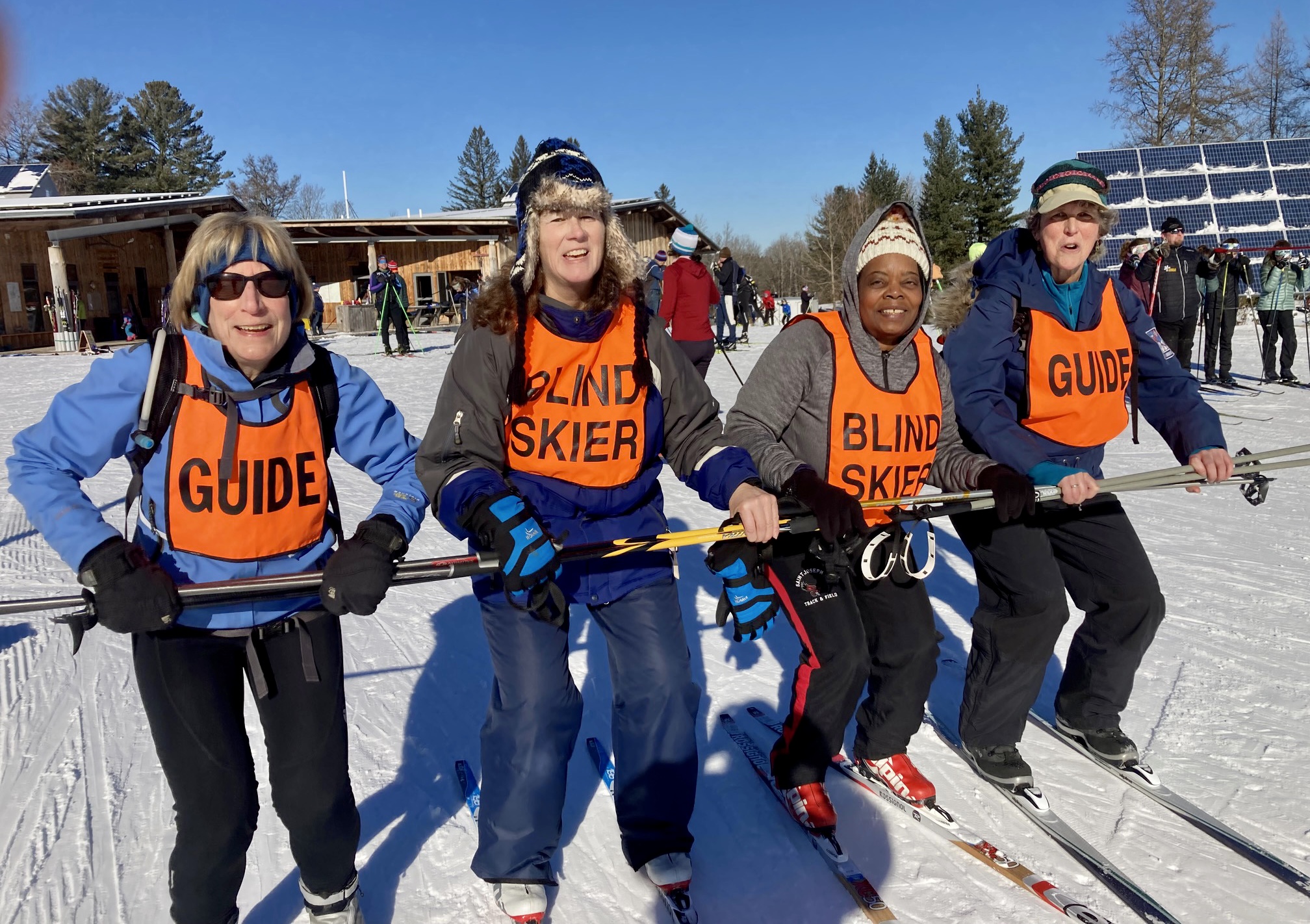
    Diane with other skiers, wearing her guide bib
    Diane Manganaro (guide on the left)

    Q: What do you find the top rewards for being a volunteer guide?
    A: I have always loved sharing my love of xc skiing (and any outdoor pursuit) with others. Spending a beautiful New England day outdoors with friends and/or family, biking, hiking kayaking, sailing, xc-skiing, whatever is what life is all about.

    Q: How long have you been sporty?
    A: Forever.

    Q: What are your top sports?
    A: XC skiing, biking, paddling (kayaking, canoeing), sailing, hiking, tennis.

    Q: Anything about your life that you would like to share?
    A: I am an identical twin. My husband was my soul-mate and I lost him two years ago. I like to cook (and eat too, of course). I also have a tomato and herb garden that I grow in the warm months.

    Q: Where are you from?
    A: I grew up in Arlington, MA.

    Q: What is your background?
    A: I went to Tufts University and earned a Bachelor of Science degree. Later, I pursued a Master’s in Public Health with a concentration in environmental health from Boston University School of Public Health. For most of my career, and currently, I have worked at the MassDEP (Department of Environmental Protection), specifically in the Office of Research and Standards. In this role, I evaluate exposure and risk to people from environmental contamination, establish health-based guidance values for contaminants in water and air, and monitor contaminants in freshwater fish. Additionally, I study the potential health effects of contaminants on people in their daily lives.

    Q: How did you first hear about NESFL?
    A: Through the AMC of which I have been a member for many years.

    Q: Do you have any additional interests outside of NESFL?
    A: I have a cottage in Dennisport and love Cape Cod and the ocean and spend as much time as I can down there in all seasons except winter, which is dedicated to xc skiing.

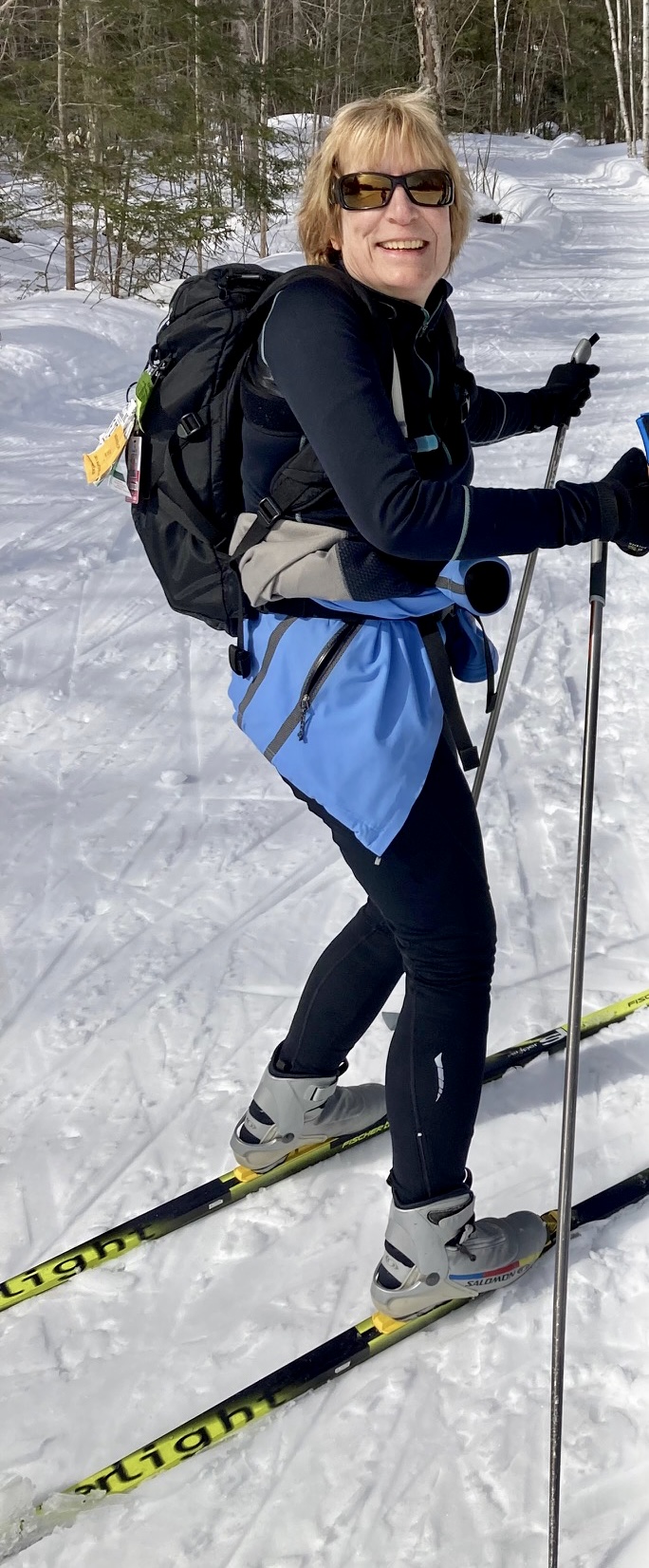
    Diane on skis in a forest
    Diane Manganaro in action with skis!